 EMHO
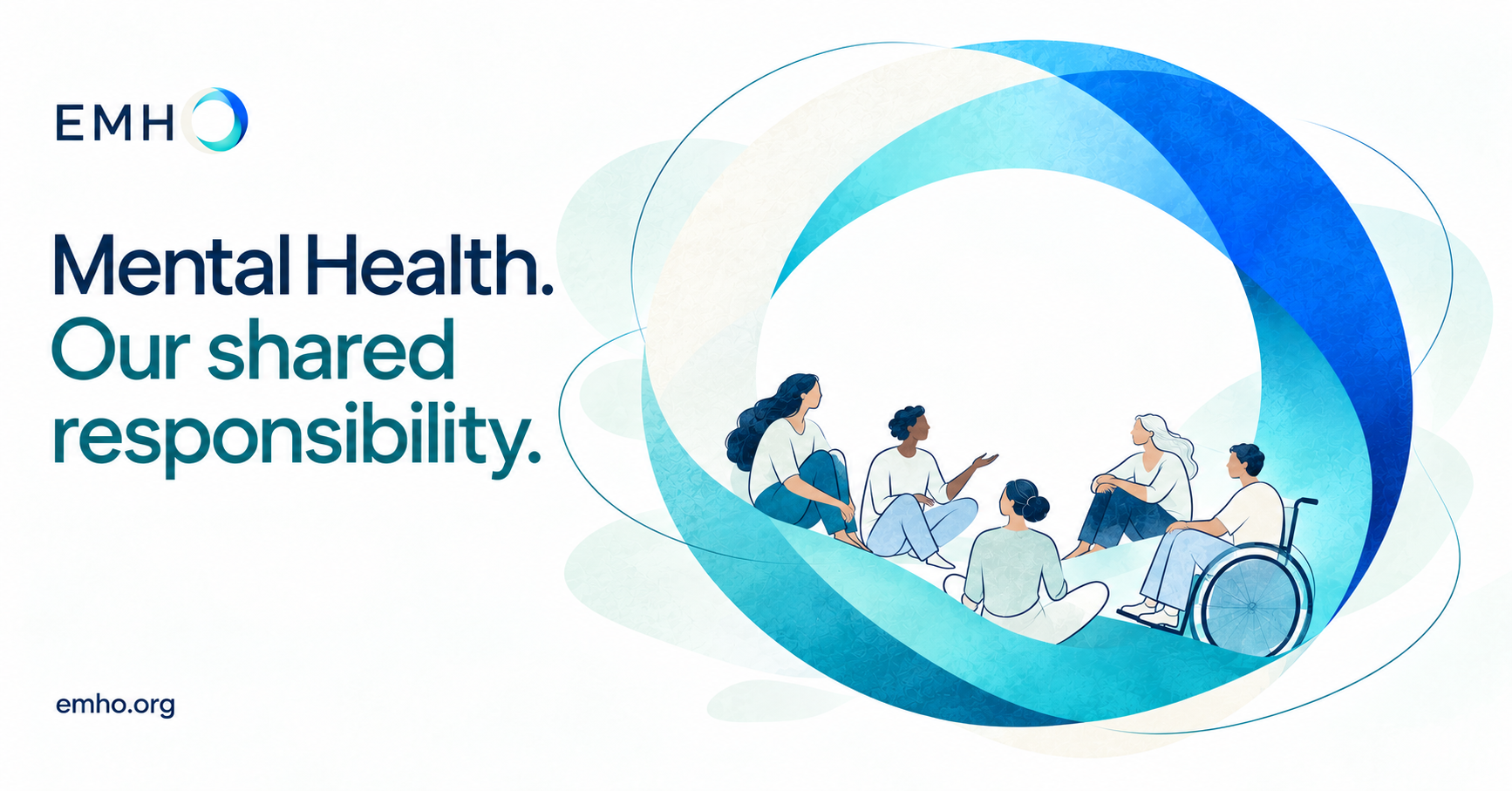
What changes when people stop being an audience and begin making something together? This question sits at the heart of the doctoral research I am developing. I want to investigate how artistic situations are composed, how participation becomes meaningful, and how shared creative environments may shape experiences of connection, agency and mental well-being.
Interested in supporting this work? Explore the European partnership invitation →
Art as a situation we inhabit
My background in visual arts, graphic and advertising design informs a practice that moves between images, space, performance and collective experience. Through Spirit+Studio and the development of Kunstmarkt.be, I have become interested in the organisation of artistic encounters: who enters, who feels entitled to participate, who shapes the programme, and who remains outside it.
The working title is Art, Leisure & Pleasure: Participatory Art Practices as Ecosystems for Connection and Wellbeing. I use 'ecosystem' to examine relationships between people, spaces, materials, artistic choices and organisational conditions. A workshop or performance exists within a wider environment of access, expectations, time, resources and power.
The proposed progression is simple to describe but complex to investigate: observe, participate, create, co-create, organise. Moving through these positions may redistribute authorship and responsibility. It may also create discomfort, unequal influence or new barriers. Those possibilities belong within the research.
Why leisure and pleasure matter
By leisure, I mean time and space in which making and encounter can take place without every action being judged by productivity. Pleasure refers to enjoyment, curiosity, beauty, play and embodied experience. Neither term implies that participation is always comfortable or that art should become a compulsory route to happiness.
My question concerns the conditions under which an artistic environment becomes meaningful to its participants. Does someone feel able to contribute? Can they decline? Who decides what counts as a valuable contribution? How do cultural background, cost, disability, language and familiarity with art affect the experience?
A research question, rather than a therapeutic promise
The WHO Regional Office for Europe's 2019 scoping review by Daisy Fancourt and Saoirse Finn synthesised evidence from more than 3,000 studies on arts, health and well-being. It included diverse methods and settings. That breadth motivates careful inquiry, while requiring attention to the strength and relevance of particular findings. It does not validate my proposed model. [1]
I would examine belonging, agency, meaning and experienced well-being through artistic research and appropriate qualitative methods. Clinical outcomes would require a different level of expertise and study design. Artistic participation must not be presented as a substitute for professional mental healthcare.
Three settings, one comparative inquiry
The first setting would involve fieldwork with self-organised or intentional communities in Portugal. Tamera is a prospective case, subject to agreement and appropriate permissions. The inquiry would examine how environment, shared time, artistic activity and collective organisation shape participation, including tensions and exclusions.
The second setting would be an urban artistic living lab in Antwerp, drawing on Spirit+Studio and Kunstmarkt.be. Temporary and recurring prototypes could combine visual creation, performance, music, storytelling and spatial design. The research would investigate how these activities become a coherent artistic environment and how participants experience their roles.
The third setting would be an educational, public or care-related institution selected with the academic host. Comparing contexts would help identify what travels, what needs adaptation and what should not be transferred.
Portugal and a possible Geneva connection form part of the developing international direction. Academic hosting, supervision, institutional participation and any Erasmus+ cooperation remain matters for agreement. These are proposed research settings and relationships, rather than an established university consortium.
Can a franchise become a research question?
A practical ambition is to investigate whether participatory arts environments could remain accessible and financially sustainable across different locations. A prototype franchise or licensing framework through Kunstmarkt.be could become one object of practice-based inquiry.
The research would ask what a shared framework should preserve and what local communities should control. Could common resources support artistic autonomy? Would licensing costs restrict access? Who owns the knowledge and benefits from its use? Could replication flatten the very relationships that made the original environment meaningful?
Developing and critically examining a prototype could contribute to the artistic practice. A commercial rollout would require its own governance, rights, financing and evaluation. The doctorate must remain free to conclude that a franchise is unsuitable or that a different organisational form would serve participants better.
EMHO: developing practical pathways through public-private collaboration
Beyond my doctoral inquiry, EMHO aims to explore and help develop arts-and-community approaches relevant to mental well-being through knowledge, cultural participation and locally grounded community environments. The intention is to bring public institutions, universities, cultural organisations, community hosts, foundations and responsible businesses into clearly scoped collaborations. This is a development ambition; no operational European delivery network or agreed consortium is claimed.
A proposed partnership could combine public access to suitable space, philanthropic or corporate financing, professional cultural programming, community participation and independent research expertise. The first task would be to agree a specific local need, the people a pilot intends to serve, responsibilities, a realistic budget and how its value would be assessed. Support from a company or public institution would not entitle it to influence research findings.
An accessible knowledge platform, country-based institutional information and the research-edition Support Package form part of the wider direction. These resources can help people understand terminology and explore ideas; they are not an individual care service or a clinically validated programme. Any future local programme would need a defined non-clinical scope, appropriate expertise and safeguards. Professional care would remain the responsibility of appropriately qualified and authorised providers.
From evaluated pilots to locally operated franchises and licences
The longer-term European ambition is to explore a network of locally operated arts-and-community environments. Franchise and licensing arrangements are possible organisational tools for sharing suitable practices, resources and know-how. Their suitability would need to be established through pilots and independent evaluation, rather than assumed from the outset.
In a proposed franchise, a local operator might use an agreed identity and operating framework with training and ongoing support. A licence could grant narrower rights to specified materials, productions, programme formats or intellectual property. The exact rights, fees, responsibilities, duration and quality requirements would have to be defined in separate agreements. Neither arrangement would itself certify a mental-health treatment or guarantee social or financial results.
Local autonomy would be central: communities should help shape programming for their languages, cultures, access needs and circumstances. Any shared framework would need proportionate quality standards, facilitator competence, participant safeguards, accessible pricing, complaints procedures and transparent reporting. Evaluation would include who participates, who remains excluded, participants' experiences, costs, unintended effects and the practical conditions for continuing the work.
The intended development sequence is to co-design a limited pilot, deliver it with appropriate expertise, independently review its strengths and weaknesses, and only then consider adaptation in another location. Expansion could proceed through public-private agreements and, where justified, franchise or licensing contracts. Changes in governance or a decision not to replicate would remain legitimate outcomes.
Kunstmarkt.be and the ART+Ecosystem could contribute artistic formats, cultural spaces, media and operational experience. EMHO's proposed public-benefit role would focus on knowledge exchange, partnership development and accountability. Ownership of intellectual property, payments between related initiatives, conflicts of interest and the destination of programme income would need explicit agreements and disclosure.
Funding the work and reporting what it achieves
Third-party financing is needed to turn these ambitions into properly scoped work. A prospective partner could contribute doctoral support, a community venue, research or evaluation expertise, programme delivery, or funding for a defined pilot. These contributions would have separate budgets, deliverables and reporting arrangements. Public-benefit funding would not automatically finance a commercial franchise rollout.
ART+GALA is being developed conceptually as a possible annual fundraising flagship within the ART+Ecosystem, with an ambition to contribute to defined EMHO projects. Event production costs, sponsor benefits and any net amount available to a beneficiary would be separately disclosed. A Monte Carlo edition remains a proposal, with no confirmed venue, date, agency appointment or fundraising result. Before any collection of funds, the receiving legal entity, intended use, applicable terms and reporting responsibilities would need to be established.
The objective is sustained public value: opportunities for meaningful participation, better understanding of community conditions and transparent learning about what works, for whom and at what cost. Any larger fundraising ambition must follow a costed programme and appropriate organisational arrangements. It is not evidence of secured resources or proven impact.
The practice and the book
I envisage two connected bodies of work: an artistic portfolio and a substantial book-length monograph. The portfolio would document participatory situations, spatial prototypes and the decisions through which they develop. The monograph would bring theory, fieldwork, reflective practice and comparative analysis into sustained dialogue.
The proposed methods include participant observation, interviews, group discussions, an artist's research journal and iterative artistic prototyping. Their final design, recruitment and analytical framework would be developed with supervisors. Any use of well-being measures would require appropriate expertise.
The relationship between the examined thesis and a later public-facing book would be agreed with the host institution. Writing should make the research open to scrutiny, including unsuccessful experiments and conflicting interpretations.
An invitation to help develop the inquiry
I am currently an artist and prospective PhD student seeking an appropriate academic host, supervisory team and third-party financing. A provisional four-year pathway would move from theory, methods and community fieldwork to urban practice, institutional comparison and synthesis. Duration and scope remain open to the host's requirements.
I welcome conversations with researchers, cultural organisations, community hosts and funders interested in developing this inquiry responsibly. The aim is to understand how participatory art is made and experienced, and to examine what kinds of shared environments are worth sustaining.
For research and organisational enquiries: contact@emho.org.
Reference
Research status, independence and legal notes
I initiated EMHO.org, the European Mental Health Organization initiative, and Kunstmarkt.be. EMHO is an independent initiative in formation, with Geneva as its proposed organisational base. This does not establish a Swiss registered seat, incorporation, charity or tax-exempt status. EMHO is not presented as an agency of the European Union, the United Nations or WHO, or as affiliated with a university.
These interests make researcher positionality and conflicts of interest central questions. Voluntary participation, informed consent, privacy, clear role boundaries and freedom to publish negative findings would be essential. Doctoral expenditure, EMHO operations and any commercial development would need separate accounts and agreements.
EMHO could eventually share reviewed findings and support knowledge exchange. Its involvement would not confer clinical authority or determine the academic conclusions.
This essay presents the author's personal research perspective. It is not a peer-reviewed paper, an approved doctoral protocol or a statement of clinical effectiveness. The author has interests in EMHO.org and Kunstmarkt.be. No named field site or institution is presented as a confirmed research partner. The illustration is AI-generated and does not depict actual programme participants. This essay is an invitation to discuss research and development; it is not an offer to sell a franchise or an investment product, or a claim that contributions qualify for tax relief. Any future licence could cover only rights that the contracting party owns or is authorised to grant.
These notes clarify the scope of this personal research essay. They do not constitute legal advice, confirm regulatory compliance or replace applicable legal duties.
Continue the conversation
Explore the author’s profile or discuss a possible research or organisational collaboration.
About Wim Prior Van Gucht →Discuss collaboration →